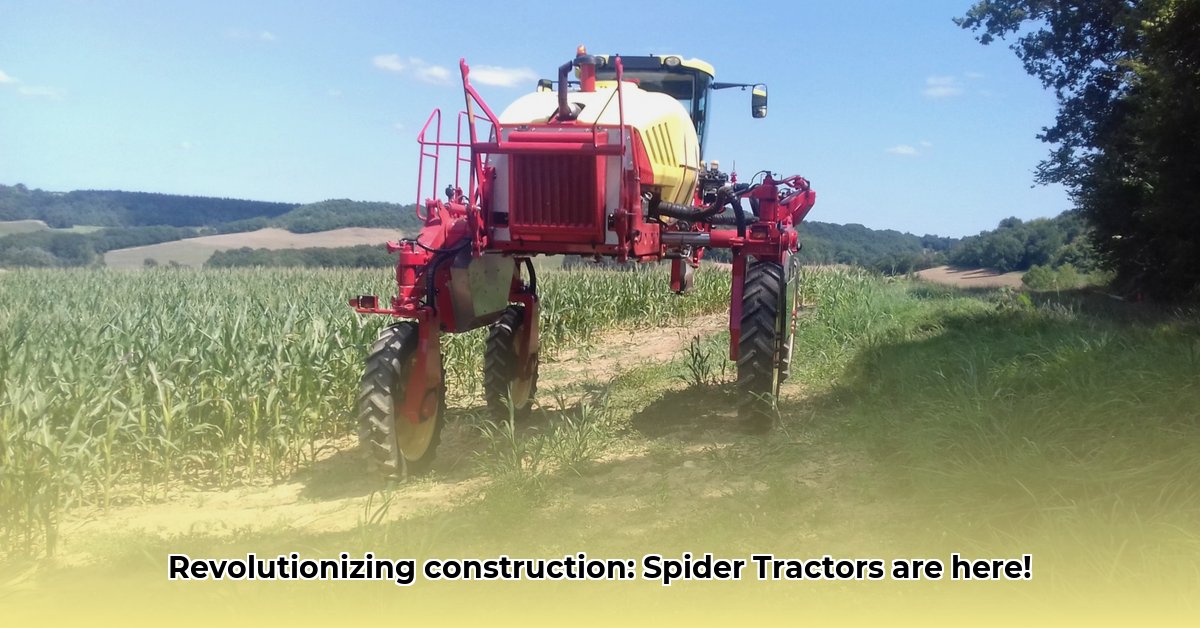
Spider tractors are revolutionizing construction and landscaping, offering unparalleled maneuverability and precision in challenging terrains. This versatile machinery combines the strengths of excavators and remote-controlled mowers, providing a powerful and efficient solution for a wide range of applications. But how do they work, what are their advantages and disadvantages, and what does the future hold for this innovative technology? This article provides a comprehensive overview for construction professionals, landscapers, and investors. For more information on specific models, check out these resources.
Understanding Spider Tractors: A Blend of Power and Precision
Spider tractors are a unique class of machinery combining the digging capabilities of excavators with the precise control of remote-controlled mowers. Their defining feature is their multi-legged design, resembling a spider, allowing them to navigate incredibly difficult terrain with ease. This innovative design enables access to previously unreachable locations, significantly enhancing efficiency and safety in construction and landscaping projects.
How Spider Tractors Function: Hydraulics and Independent Leg Movement
The operation of a spider tractor relies on a sophisticated system of hydraulics and independently controlled legs. Each leg moves independently, allowing the machine to adapt to uneven surfaces and maintain stability on steep inclines. Advanced hydraulic systems power both the legs and the attached tools, such as digging buckets or mower decks, providing precise control and powerful operation. Many models offer remote control operation, maximizing operator safety in precarious working environments. This also allows for streamlined management of multiple machines by a single operator, boosting overall productivity.
Types of Spider Tractors: Excavators and Mowers
While the term "spider tractor" is often used broadly, the technology encompasses two primary types:
- Spider Excavators: These are heavy-duty machines designed for earthmoving, demolition, and heavy digging tasks in demanding environments. Their strength and power enable them to tackle challenging terrain effectively.
- Remote-Controlled Mowers: These specialized machines focus on precision landscaping and slope maintenance, particularly useful in areas inaccessible to traditional mowers.
Both types share the characteristic multi-legged design, guaranteeing stability and control even on difficult inclines.
Advantages of Spider Tractors: Increased Efficiency and Safety
The adoption of spider tractors offers significant advantages across various sectors:
- Unmatched Accessibility: Their unique design allows them to reach locations inaccessible to traditional machinery, opening up new possibilities for construction and landscaping projects. Are you still struggling to reach those hard-to-access areas? Spider tractors offer a solution.
- Enhanced Operator Safety: Remote operation significantly reduces operator exposure to hazardous conditions, minimizing risks associated with working on steep slopes or unstable ground. Isn't safety a top priority on every job site?
- Improved Efficiency: Their maneuverability and precision translate into faster project completion and reduced labor costs, improving your project's bottom line. How much time and money could you save with these machines?
- Versatile Applications: Depending on attachments, these machines can perform a wide range of tasks, from excavation and demolition to precision landscaping and slope maintenance.
Challenges and Considerations: Costs and Training
Despite their numerous advantages, spider tractors present certain challenges:
- High Initial Investment: The specialized technology requires a substantial upfront investment, making them more expensive than traditional equipment. Is the initial cost justified by the long-term benefits?
- Specialized Maintenance: The complex mechanics often necessitate specialized maintenance and repair expertise, potentially increasing long-term costs. Is finding qualified technicians a potential obstacle?
- Operator Training: Safe and efficient operation requires specialized training, adding to the overall cost of implementation. How much does skilled operator training cost?
- Regulatory Compliance: The use of remote-controlled machinery necessitates compliance with relevant safety regulations and operator training standards.
The Future of Spider Tractors: Technological Advancements and Market Growth
The future of spider tractor technology promises significant advancements. Ongoing research and development focus on improving precision, automation, and remote capabilities. We can anticipate improved materials and designs leading to more durable, lower-maintenance machines. Increased adoption across construction and landscaping is highly probable, representing a substantial shift towards more efficient and safer practices.
Key Takeaways:
- Spider tractors offer unparalleled maneuverability and precision in challenging terrains.
- Remote control operation significantly enhances operator safety.
- Initial costs and specialized maintenance are key considerations.
- Technological advancements promise improved efficiency and wider adoption.
"Spider tractors are transforming the construction and landscaping industries, offering a significant leap forward in both efficiency and safety," says Dr. Emily Carter, Professor of Engineering at MIT. "As the technology matures, we can expect to see even wider adoption and further innovation in this exciting field."
[Further research and model comparisons can be found through links to manufacturer websites and industry publications.]